How to Get Views on YouTube A UK Creator Guide
Getting more views on YouTube isn't about some secret hack. It really comes down to a simple formula: make a compelling promise to a potential viewer, and then deliver an exceptional payoff. Your title and thumbnail are the promise, and your video content is the payoff. Nail this, and you’re on your way.
Laying the Groundwork for More YouTube Views
Before you start chasing viral trends or getting bogged down in complicated promotion strategies, you need to get the basics right. It’s all about understanding what makes the YouTube algorithm tick. The platform has one main goal: keep people on YouTube for as long as possible. So, it naturally pushes videos that viewers don't just click on but actually watch until the end. This is where your focus needs to be from day one.
The competition is fierce. Here in the UK, YouTube is now the second most-watched media service, beating out traditional channels like ITV and sitting just behind the BBC. With UK viewers spending an average of 39 minutes on the platform every single day, there's a huge audience waiting for you. You just need to know how to capture their attention. You can dig deeper into these viewing habits in Ofcom's latest report.
The Promise and The Payoff
Think of every video's success as a two-act play. The first act is the Promise. This is your video's first impression, conveyed entirely through its title and thumbnail. It's your one shot to stop someone from scrolling past. It needs to be intriguing enough to earn that click.
The second act is the Payoff—the video itself. If you promised “The Ultimate Guide to Container Gardening,” your video had better deliver exactly that in a clear and engaging way. If you don't deliver, viewers will click away almost instantly, and that’s a massive red flag for the algorithm.
When you get this right, a compelling promise earns the click, and a strong payoff keeps viewers happy, which leads directly to channel growth.
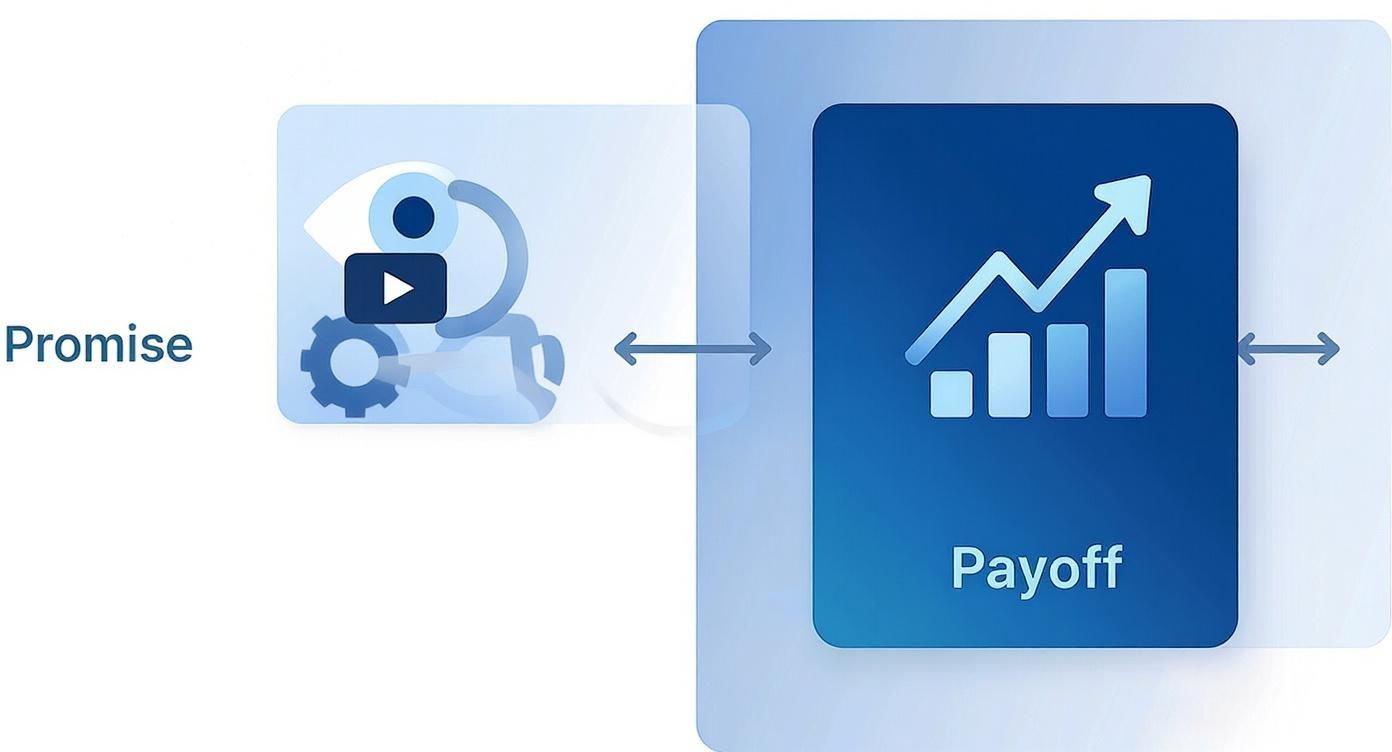
Mastering the balance between a tempting promise and a satisfying payoff truly is the foundation for getting more views.
Mastering the Core Metrics
If you want to know how well you're delivering on your promise and payoff, YouTube gives you two crucial metrics to watch. Everything else is secondary.
The table below breaks down the only two metrics you really need to obsess over. They tell you exactly how your "Promise" (CTR) and "Payoff" (Retention) are performing and give you clear direction on what to fix.
Core Metrics That Drive YouTube Views
| Metric | What It Measures | Why It Matters | How to Improve It |
|---|---|---|---|
| Click-Through Rate (CTR) | The percentage of people who click on your video after seeing it (an impression). | It directly measures how effective your "Promise" (title and thumbnail) is at grabbing attention. A low CTR means your video isn't getting a chance, no matter how good it is. | Test different thumbnail styles, write more compelling and curiosity-driven titles, and analyse what’s working for top channels in your niche. |
| Audience Retention | The percentage of your video that people watch, on average. | It's the ultimate measure of your "Payoff." High retention tells the algorithm your content is valuable and satisfying, encouraging it to promote your video to a wider audience. | Hook viewers in the first 15 seconds, use pattern-interrupts (like B-roll or graphics), maintain a good pace, and deliver on the title's promise. |
By focusing on these two numbers, you're giving the algorithm exactly what it wants: videos that people click on and keep watching.
A high CTR with low retention tells YouTube you have great packaging but poor content (clickbait). Conversely, low CTR with high retention means your content is great, but your title and thumbnail aren't doing their job. The goal is to excel at both.
Just look at UK creator Ali Abdaal. His video titles, like "How I Type REALLY Fast (156 Words per Minute)," make a specific and intriguing promise. The thumbnails are clean, feature his face to build that all-important familiarity, and use minimal text. Once you click, the video delivers precisely what was promised with well-structured advice. That’s why his audience retention is so strong and his channel has grown so successfully.
If you’re just getting started on this journey, our guide on how to start a YouTube channel is a great place to build these foundational skills.
Finding Video Ideas People Actually Search For
The battle for views is often won long before you ever hit the record button. A beautifully produced, brilliantly edited video on a topic nobody is looking for will, quite simply, fall flat. The real secret to getting more eyeballs on your content starts with rooting your ideas in genuine audience demand.
This means shifting your mindset from "what do I want to make?" to "what do my viewers want to watch?". It’s the difference between guessing and knowing, between hoping for views and planning for them.
Tapping into Audience Demand
Think of yourself as a detective for your niche. Your first port of call should be snooping around successful channels that you admire. Don't just mindlessly watch their most popular videos—dissect them. What problems are they solving? What specific questions are they answering for their audience?
The comments section on these videos is an absolute goldmine. It's a direct line to your potential audience, often revealing follow-up questions and related pain points that viewers are desperate to have solved. For example, a comment on a popular "Beginner's Guide to Photoshop" video might read, "This was great, but how do I use the pen tool properly?" That's a perfect, validated idea for your next video.
Of course, you can bring in some heavier equipment too. Tools like TubeBuddy or VidIQ are brilliant for this, showing you valuable data like search volume and keyword competition right inside the YouTube interface. This lets you spot trending topics and, more importantly, identify gaps in the market. You can dive deeper into this with our guide on how to find low-competition keywords and apply those same principles.
Using Trends to Your Advantage
Timing is everything. Creating content that lines up with seasonal events, holidays, or breaking trends can give your video a massive initial push from the algorithm. For this, a simple (and free) tool like Google Trends is your best friend.
Let's say you run a UK-based cooking channel. Instead of randomly filming a shepherd's pie recipe in the middle of July, a quick check on Google Trends would show you that search interest for that term absolutely skyrockets in the UK between October and February.
Armed with that knowledge, you'd schedule your video to go live in late September, positioning it perfectly to ride the wave of seasonal search traffic. It’s a simple but powerful strategy.
This same logic applies to any niche you can think of:
- A gardening channel can see when searches for "how to plant tulips" spike in the autumn.
- A tech channel can get ahead of new phone launches or major software updates.
- A fitness channel can prep content for the inevitable "New Year, New Me" surge every January.
The key is to think ahead. By anticipating what your audience will be searching for next month or even next quarter, you create content that feels incredibly relevant and timely, making it much more likely to be discovered.
Validating Your Ideas Before You Film
Okay, you've got a list of promising topics. The final—and most crucial—step is validation. Just because an idea seems good doesn't mean a wider audience will agree. You need to confirm that real demand exists before you invest your precious time and energy.
This is where a tool like Vidito can really speed things up. Instead of trying to piece together data from half a dozen different sources, Vidito surfaces high-potential ideas and gives you the validation you need at a glance. It crunches the numbers on search volume, competition, and trend data to assign each idea a "virality score," helping you quickly see which topics have the best shot at success.
If you're still looking for a spark of inspiration, check out these 10 profitable YouTube ideas for channel growth. By systematically researching, timing, and validating your video ideas, you stack the odds in your favour. It transforms content creation from a game of chance into a repeatable strategy for growth.
Designing Thumbnails and Titles That Get Clicked
On the crowded YouTube homepage, your thumbnail and title are your digital billboard. You get a split second to grab someone's attention and earn their click. This isn't about being the loudest or brightest; it’s about understanding the psychology that makes someone stop scrolling, get curious, and choose your video over all the others.
Think of your title and thumbnail as a single, powerful unit. They need to work in harmony to tell a micro-story, create an emotional hook, and set a clear expectation for the viewer. When you get this combination right, your Click-Through Rate (CTR) shoots up, which is a massive signal to the YouTube algorithm that your content is worth promoting.

The Anatomy of a High-Performing Thumbnail
A killer thumbnail is part art, part science. It has to be visually striking, emotionally resonant, and instantly understandable—even when it's shrunk down to a tiny square on a mobile phone. There's a reason YouTube reports that 90% of the best-performing videos have custom thumbnails. They aren't an afterthought; they're a core part of the strategy.
Take a look at one of the UK's top tech creators, Mrwhosetheboss (Arun Maini). His thumbnails are a masterclass in clean, effective design.
- Expressive Faces: He almost always includes his own face, showing a clear, strong emotion like shock, curiosity, or excitement. This creates an immediate human connection and makes you wonder what on earth caused that reaction.
- Minimal Text: If there's any text, it’s usually just two or three high-impact words (like "Don't Buy!"). This keeps it readable on any screen and complements the visual story instead of cluttering it.
- Clean Visuals: The product or concept at the centre of the video is always clear and well-lit, usually against a simple, colour-graded background. There’s zero confusion about what the video is about.
By following these principles, you create thumbnails that aren't just seen but felt, compelling people to click and satisfy the curiosity you've sparked.
Crafting Titles That Spark Curiosity
While your thumbnail grabs the eye, the title is what engages the mind. The goal here is to write a title that promises real value and creates intrigue without resorting to cheap clickbait that will only break your audience's trust. A great title makes a specific promise that your video can confidently deliver on.
Here are a few powerful title formulas that just work:
- The "How To" Title: A classic for a reason. It directly addresses a viewer's problem.
- Example: "How to Make Perfect Sourdough Every Single Time"
- The "Mistake" Title: This one taps into a viewer's fear of doing something wrong and positions your video as the clear solution.
- Example: "5 Common Mistakes New Gardeners Make (And How to Fix Them)"
- The "Comparison" Title: Pitting two popular things against each other taps into tribalism and our desire to see a clear winner.
- Example: "iPhone 15 Pro vs Pixel 8 Pro: The Ultimate Camera Test"
Specificity is your best friend here. "How to Edit Photos" is weak and generic. "How to Edit Moody Landscape Photos in Lightroom" is strong because it targets a specific person with a specific need.
Never over-promise in your title. A title like "The Only Camera You'll Ever Need!" sets an impossibly high bar. If your video doesn't live up to that massive promise, people will click away in seconds. This kills your audience retention and tells YouTube your video is misleading.
To help you nail this crucial step, here’s a quick checklist comparing effective strategies with common pitfalls.
High-Impact Thumbnail and Title Checklist
| Element | Do This | Avoid This |
|---|---|---|
| Emotion | Show a clear, relevant human emotion (surprise, curiosity, joy) to create a connection. | Using generic stock photos or a blank expression that conveys nothing. |
| Clarity | Ensure the main subject is large, well-lit, and instantly recognisable. | A cluttered, busy design where the viewer can't tell what the video is about. |
| Text | Use 2-5 powerful, easy-to-read words that create intrigue. | Long sentences or small, unreadable fonts that get lost on mobile screens. |
| Branding | Develop a consistent style (colours, fonts, layout) so your videos are recognisable. | Making every thumbnail completely different, which prevents brand recognition. |
| Title Specificity | Make a clear and specific promise (e.g., "for beginners," "in 10 minutes"). | Writing vague, generic titles like "My Trip to London" or "Cool Gadgets." |
| Curiosity Gap | Hint at the outcome or a surprising result without giving it all away. | Revealing the entire answer in the title, leaving no reason to watch. |
| Title-Thumbnail Synergy | Make sure they tell a cohesive story together. The title should complement the visual. | A title and thumbnail that seem disconnected or contradict each other. |
Getting this right is an iterative process, but following these guidelines will put you way ahead of the competition.
Testing and Refining Your Combination
Let’s be honest: your first idea for a title and thumbnail probably isn't your best one. The top creators constantly A/B test different options to see what resonates with their audience before they publish.
Even if you don't have access to fancy testing tools, you can still apply the same thinking. Create two or three different thumbnail variations for your next video. Show them to a friend or fellow creator—without any context—and simply ask them which one they are most likely to click on and why. This simple feedback loop can give you incredibly valuable insights into what's working and what isn't, helping you consistently create packaging that demands to be clicked.
Holding Viewer Attention to Boost Watch Time
Getting someone to click on your video is a massive win, but that's really just the start of the journey. The real magic—and the signal that tells YouTube your video is genuinely worth watching—is what happens after the click. We're talking about audience retention: keeping people glued to their screens.
High retention is probably the most powerful signal you can send to the YouTube algorithm. When you keep people watching, it tells the platform you delivered on the promise of your title and thumbnail. This directly bumps up your Average View Duration and Watch Time, two metrics that heavily influence how far and wide YouTube will push your content. It’s that simple. If they stick around, YouTube shows your video to more people.

Nail the First 15 Seconds
You have a sliver of time—a tiny window—to convince a new viewer they’ve landed in the right place. The first 15-30 seconds of any video are absolutely critical, because this is where the biggest drop-off almost always happens. Your intro, or "hook," has to immediately confirm the video’s value and grab their attention before they have a chance to second-guess their click.
Here are a few hook strategies that I’ve seen work time and time again:
- The Cold Open: Forget the intro music and logos. Jump straight into the most exciting or dramatic moment of the video. Case study: Watch how travel vlogger Yes Theory often starts their videos mid-adventure, immediately hooking the viewer with action and intrigue before explaining the backstory.
- The Question Hook: Pose a direct question that taps right into your viewer's problem. For instance, "Are you sick and tired of your houseplants dying, no matter what you do?" It instantly makes the viewer feel like you get them.
- The Promise Hook: Get straight to the point and state the value you're about to deliver. A perfect example is, "In the next five minutes, I'm going to show you the one trick that will make your sourdough starter completely foolproof."
This initial moment is your one shot to stop someone from clicking away. Bring the energy and deliver clarity from the very first second. Make it count.
Keep the Energy High with Pattern Interrupts
Once you've hooked them, the next challenge is keeping their focus. The human brain is wired to crave novelty. Watching a single, static shot of someone talking for minutes on end can get monotonous fast, leading to viewer fatigue and that dreaded drop-off. This is where pattern interrupts are your best friend.
These are simply small, strategic changes in your video's visual or auditory flow, designed to reset the viewer's attention. Think of them as mini-jolts that keep the brain from zoning out.
A pattern interrupt can be as simple as changing the camera angle, popping in a sound effect, or putting a key phrase on the screen as text. The goal is just to break the monotony and prevent your viewer's mind from wandering off.
If you want to see a masterclass in this, watch any video from Ali Abdaal. He’s constantly cutting to B-roll footage, displaying key ideas as on-screen graphics, and changing his framing to keep the visual experience dynamic. It’s a huge part of why his long, info-packed videos are so engaging. You can explore more about how creators structure their content in our deep dive on making effective long-form YouTube videos.
Show, Don’t Just Tell
One of the most powerful ways to hold attention is to lean heavily on B-roll—that's any supplemental footage you use to visually illustrate what you're talking about. If you're reviewing a new gadget, show close-ups of its features in action. If you're telling a story about a trip, cut to beautiful footage from that location.
This technique does two brilliant things at once:
- Adds Context: It makes abstract concepts feel tangible and way easier to understand.
- Acts as a Pattern Interrupt: It provides a visual break from your main shot, keeping the video dynamic and fresh.
This is especially relevant in the UK, where a massive chunk of viewers are actively looking for practical content. Tutorials (14% of users) and educational videos (9%) are hugely popular, showing a clear appetite for content that visually explains how to do things.
To truly build a loyal audience that watches to the end, you also need a strong community. It's a great idea to consistently improve your social media engagement on other platforms. When people feel a real connection with you, they're far more likely to stick around. By combining a killer hook, dynamic editing, and great visual storytelling, you create an experience that viewers will want to see right through to the end.
Promoting Your Videos and Building a Community
Hitting 'publish' isn't the finish line; it’s more like the halfway point. If your strategy is to just upload a video and hope for the best, you’re setting yourself up for disappointment. To really get seen, you need a proactive plan to give your content an initial push, while building a community creates the kind of long-term growth that successful channels are made of.
This isn't about spamming your links everywhere you can think of. It's a strategic game of sharing your content where your target audience already hangs out. The trick is to provide value first, making your video a helpful resource, not just another creator yelling for attention.

Smart Promotion Beyond YouTube
To get that early momentum, you’ve got to get your video in front of fresh eyes. This means looking beyond the YouTube ecosystem and tapping into the existing communities where your ideal viewers already spend their time.
Reddit is a brilliant place to start. Find subreddits that are a perfect match for your niche. For example, if you make videos about restoring old furniture, you should be a regular in places like r/woodworking or r/DIY. But don’t just drop a link and run. Become an active member, answer people's questions, and only share your video when it directly solves a problem someone is asking about. This approach builds instant credibility and sends highly engaged people your way.
Other platforms offer their own unique advantages, too:
- Instagram Reels/TikTok: Chop up a short, punchy 15-second teaser that shows off the most exciting moment or biggest takeaway from your full video. End it with a clear call-to-action, like "Full tutorial is in my bio!"
- Niche Forums: If you're in a specialised field like classic cars or landscape photography, dedicated forums are absolute goldmines. Share your expertise in threads and then link to your video as a deeper resource. It’s a great way to establish yourself as an authority.
- Email Newsletters: Even a small email list is incredibly powerful. Your subscribers are your biggest fans, so letting them know about a new video guarantees an initial surge of views from people who are genuinely interested.
The golden rule of external promotion is value first, link second. Always aim to contribute to the conversation before you ask for a click. This simple shift in mindset is what separates smart promotion from spam.
Turning Viewers Into a Community
While promotion gets you those initial views, it's the community that gets you repeat views. A loyal community creates a powerful feedback loop. They're the first ones to watch, like, and comment on new videos, which sends immediate positive signals to the YouTube algorithm.
Building this sense of belonging is an active process. It’s all about making your audience feel seen and heard, turning them from passive viewers into active participants in your channel's journey.
A fantastic case study in community building is the channel DankPods. The creator, Wade Nixon, has built an incredible community through inside jokes and recurring themes. People don't just watch for the tech reviews; they watch to be part of the experience. He actively engages with comments and has created a shared language with his audience, making them feel like they're in on something special.
Practical Ways to Foster Community
Building that loyal following doesn't need to be some complicated, grand strategy. It really just comes down to consistent, genuine interaction.
You can get started with a few simple practices:
- Ask Engaging Questions: Don't just end your videos with "let me know what you think." Ask a specific, open-ended question that encourages a real response, not just a one-word answer. Example: Instead of "What do you think?", a cooking channel could ask, "What's the one ingredient you always add to your chilli? Let me know!"
- Pin and Reply to Comments: Pinning a particularly insightful or funny comment makes that person feel amazing. And just taking the time to reply to comments, even with a simple "thanks!", shows you're actually listening.
- Use the Community Tab: This feature is massively underutilised. Post polls, share behind-the-scenes photos, or just drop simple text updates to keep your audience engaged between your main video uploads.
By making your channel a two-way conversation, you build an army of supporters who won't just watch every video but will also become your biggest advocates across the web. This dedicated audience is your most valuable asset in the quest for more views.
Your Top YouTube Questions, Answered
Getting started on YouTube always throws up a few questions. When you're trying to grow a channel, it's easy to get stuck on the small stuff. Here are some straightforward answers to the common hang-ups I see UK creators wrestling with all the time.
How Long Does It Take to Get Views on YouTube?
There's no one-size-fits-all answer, but here’s the reality: building a channel with a reliable, consistent viewership usually takes anywhere from 6 to 12 months of dedicated effort.
Of course, a single video can go viral overnight if you tap into the perfect topic at just the right moment. But that's a lottery ticket. Building a sustainable channel is a marathon, not a sprint. The real key is to consistently create great content, learn from your analytics, and keep improving. Do that, and the views will come.
Do I Need an Expensive Camera to Get More Views?
Absolutely not. Seriously, the smartphone you already own is more than good enough to create high-quality videos that people will love.
Viewers today are far more interested in the value you provide, the story you tell, and your personality than they are in Hollywood-level production. In fact, your audio quality is way more important than your video quality. People will forgive a slightly grainy image, but they'll click away in a heartbeat if they can't hear you clearly. A decent, affordable microphone will have a much bigger impact on your watch time than a fancy new camera ever will.
A great idea filmed on a phone will always beat a bad idea filmed on a professional cinema camera. Don't let a lack of expensive equipment become an excuse for not creating.
Are YouTube Tags Still Important for Getting Views?
The short answer? Not really. These days, tags have a minimal impact on your video's discovery. YouTube's algorithm is incredibly sophisticated now.
It figures out what your video is about primarily from your title, description, and the automated transcript of what you actually say. While it doesn't hurt to add a handful of relevant tags, your time is much better spent obsessing over your title and thumbnail. Those two elements are what drive search rankings and clicks, making a direct and massive difference to your views.
Why Are My YouTube Views Suddenly Down?
First off, don't panic. Sometimes a drop in views is just the natural rhythm of YouTube, tied to seasonal changes or shifting trends. But other times, it's completely out of your hands.
For example, in late 2023, creators across the platform saw a noticeable dip in their view counts. YouTube later suggested this was connected to its ongoing "arms race" against ad-blocking software. Essentially, views from many desktop users with adblockers weren't being counted correctly. It’s a perfect example of how technical changes can affect your stats without you doing anything wrong.
Instead of fixating on the view count, check your other metrics:
- Are your likes and comments holding steady? This means your community is still engaged.
- Is your average watch time still strong? This shows your content quality is on point.
- Has your revenue remained stable? Sometimes this stays consistent even when views fluctuate.
Often, the best move is to simply stay the course and keep making brilliant videos for the audience you have.
Should I Delete Old Videos That Have No Views?
In almost every case, the answer is no. You won't be penalised by the algorithm for having a few duds on your channel. Think of them as valuable data—they show you what didn't work, which is just as important as knowing what did.
Besides, you never know when an old video might suddenly find its audience. A topic could become trendy months or even years down the line. The only time you should consider deleting or unlisting a video is if it contains harmful misinformation or no longer reflects your brand and values. Otherwise, leave them be and pour your energy into making your next video your best one yet.
Ready to stop guessing and start creating videos you know your audience is searching for? Vidito is an AI-powered platform that helps you generate and validate viral video ideas on autopilot. It surfaces high-potential topics, scores their virality, and helps you build a content calendar packed with data-backed concepts. Get started for free and find your next hit video idea today at https://vidito.ai.