YouTube Shorts Monetization Made Simple
Yes, you can absolutely make money from YouTube Shorts. The real secret to YouTube Shorts monetization isn't about getting paid a fixed amount per view; it's about getting into the YouTube Partner Programme (YPP) and earning a slice of the ad revenue from the Shorts Feed.
How YouTube Shorts Monetization Really Works
Short-form video has completely changed the game for creators. Building a reliable income from your content is more achievable than ever, but the system for Shorts is a bit different from what you might be used to with long-form videos. It doesn't rely on ads playing directly before or during your video.
Instead, YouTube has a shared revenue model. Each month, they pool all the money from ads that run between Shorts in the feed. This big pot of money is called the "Creator Pool." From there, the funds are divided up among all the creators who are eligible to earn.
Understanding the Creator Pool
So, how does that work in practice? Imagine your Shorts racked up 1% of all the eligible Shorts views across the UK this month. You'd be entitled to 1% of the Creator Pool for this region. Simple as that. You then keep 45% of that share, with the remainder covering music licensing fees and YouTube's cut.
This setup is built to reward consistency and videos that capture attention. The more views you pull in, the bigger your slice of the pie. It's a massive step up from the old Shorts Fund, which was a limited, invite-only bonus. Now, any creator who meets the requirements can start building a steady income stream. To see how this fits into the bigger picture, it's worth learning about how to earn money from YouTube in general.
Key Takeaway: Your earnings aren't tied to a specific view count but to your channel's overall performance relative to all other Shorts creators on the platform. This makes high engagement and consistent output crucial for success.
Eligibility at a Glance
Before you can tap into this revenue, you need to get into the YouTube Partner Programme (YPP). For Shorts creators, there are a couple of ways in.
For a quick overview, here are the core requirements to start earning from your Shorts:
YouTube Shorts Monetization at a Glance
| Monetization Path | Subscriber Requirement | Performance Requirement (in 90 days) | Primary Benefit |
|---|---|---|---|
| Shorts-Focused Path | 1,000 | 10 million valid public Shorts views | Direct route for creators focusing only on short-form content. |
| Traditional Path | 1,000 | 4,000 valid public watch hours (long-form) | Ideal for channels with a mix of short and long videos. |
Hitting either of these milestones unlocks the door to Shorts ad revenue sharing.
The opportunity in the United Kingdom is huge right now. The average engagement rate for YouTube Shorts in the UK is around 5.91%—one of the highest in the world. This tells us there's a massive, highly engaged audience just waiting for great content.
Plenty of UK creators are already cashing in. Take a creator like 'Gardening with Ben', who started by posting simple, 30-second clips of planting tips. His consistent, helpful content quickly found an audience, pushing him past the 10 million view threshold and allowing him to turn a gardening hobby into a monetized channel. A solid content strategy is non-negotiable, and that includes picking the right keywords so people can actually find you.
Getting into the YouTube Partner Programme
Let's get straight to it: joining the YouTube Partner Programme (YPP) is your ticket to earning real money from YouTube Shorts. Think of it as the official gateway. At first glance, the entry requirements might look steep, but they're absolutely achievable if you're consistently creating content people want to watch.
YouTube gives you a couple of ways to get your foot in the door. You only need to hit one of these targets, not both.
The Two Roads to YPP Eligibility
Most creators will go down one of these two paths:
The Shorts Specialist Route: This is for creators who are all-in on short-form video. The magic numbers here are 1,000 subscribers and 10 million valid public Shorts views in the last 90 days. It's a sprint, but it's designed for the fast-paced nature of Shorts.
The Hybrid Creator Route: If you mix long-form videos with your Shorts, this is probably your lane. You'll need 1,000 subscribers and 4,000 valid public watch hours on your traditional videos within the past 12 months.
It’s worth noting there's now a stepping stone to full monetisation. If you hit 500 subscribers and 3 million Shorts views in 90 days, YouTube unlocks fan-funding features like Super Thanks. It’s a great way to start earning while you work towards the bigger YPP goals.
What Actually Counts as a "Valid" Short View?
This is a crucial detail that trips up a lot of new creators. For a view to count towards your 10 million target, it must come from the Shorts Feed. That’s the endless, vertical scroll where most people discover Shorts.
Views from your channel page, embedded on a website, or from someone searching on YouTube won't move the needle for YPP qualification. This tells you exactly where your focus needs to be: creating snappy, engaging videos that the algorithm loves enough to serve up in the feed.
Luckily, you don't have to guess your progress. Just head over to your YouTube Studio.
The ‘Earn’ tab lays it all out for you. It's a clean, simple dashboard showing exactly where you stand with subscribers, public watch hours, and those all-important Shorts views.
A Real-World UK Example: The Tech Chap
So, what does this look like in practice? Let's take Tom Honeyands from the UK-based channel "The Tech Chap". He’s known for his in-depth, long-form tech reviews, but he cleverly uses Shorts to boost his channel's growth.
Tom creates punchy Shorts that showcase a new gadget or pull out a single "wow" moment from a much longer video. They're tailor-made for the feed—they’re visual, direct, and often tie into the latest tech buzz. This strategy is brilliant because it captures the attention of people who might not commit to a 15-minute review but are still curious about a new phone or laptop.
For him, Shorts act as a powerful discovery engine, attracting new subscribers who then go on to watch his longer, monetised content. It's a perfect example of how the two formats can work together to smash the YPP requirements.
My biggest piece of advice? Be consistent. The algorithm rewards regularity. When you're chasing that 10 million view goal, try to post at least one Short every single day.
There's a real opportunity here in the UK. A creator with between 1,000 and 10,000 subscribers can realistically expect to earn anywhere from £10 to £100 per month from Shorts alone, and that number climbs quickly as you grow. To stay on top of the latest changes, it’s always worth checking out YouTube's evolving monetisation policies on their official channel. Tapping into what makes a UK audience tick—be it our unique sense of humour, local events, or pop culture references—can give your Shorts the extra edge they need to take off.
Getting into the YPP and Understanding Your Revenue Share
So, you’ve hit the magic numbers and are eligible for the YouTube Partner Programme (YPP). Fantastic! The next step is the application itself, which is your formal gateway to YouTube Shorts monetisation. This isn't just a tick-box exercise; it's a genuine review where YouTube's team ensures your channel plays by their rules.
You'll kick things off from the 'Earn' tab inside your YouTube Studio. The process is pretty straightforward: you’ll review and accept the base terms, set up or link a Google AdSense account (this is how you get paid), and then submit your channel for the final review. This review usually takes about a month, give or take, and it’s a real person, not a bot, who will be looking over your content.
This diagram lays out the two main routes you can take to reach this point, showing the different subscriber and view count targets.
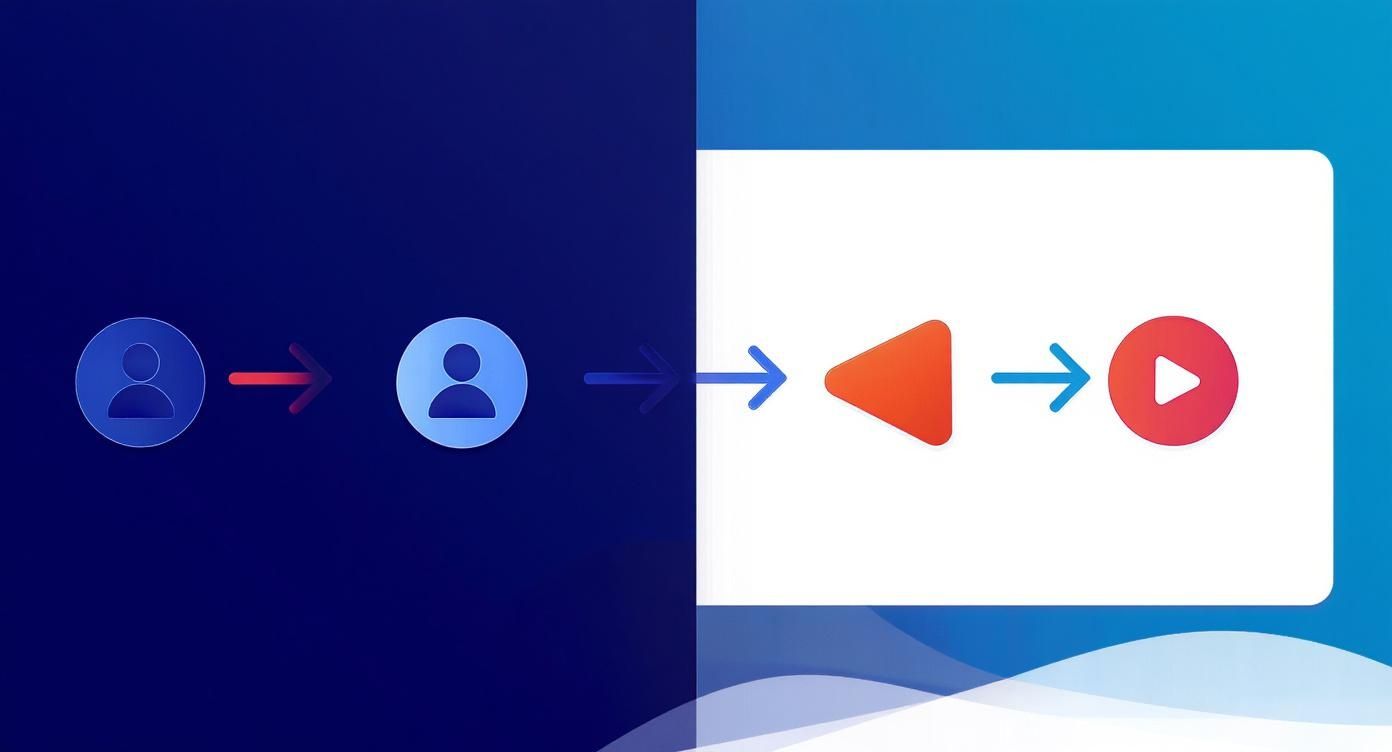
As you can see, whether you're all-in on Shorts or creating a mix of content, the destination is the same: meeting the YPP criteria to start earning.
Common Reasons for YPP Rejection
Sadly, not everyone gets accepted on their first attempt. The most common hurdle for Shorts creators, by a long shot, is the "reused content" policy. This doesn’t mean you can’t use clips from elsewhere, but your video has to add something new. Simply re-uploading viral TikToks or movie scenes without your own significant commentary, creative edits, or a unique spin is a fast track to rejection.
A common example is a channel that just compiles "funny moments" from livestreams without adding any narration or unique editing. YouTube sees this as low-effort and will likely reject the YPP application.
Another big no-no is violating YouTube's Community Guidelines. Any content that's hateful, dangerous, or full of spam will get you an instant thumbs-down. It's vital to make sure your entire channel is clean, not just your most-watched Shorts.
If your application gets rejected, don't panic. YouTube will give you a general reason why and let you re-apply after 30 days. Use that month to really audit your channel, delete or edit any videos that might be causing a problem, and get your content strategy in order.
How the Shorts Revenue Share Actually Works
Once you're in, it’s time to understand the money. It's not as simple as a set payment per view. Instead, your earnings come from a cut of the "Creator Pool"—a big pot where all the ad revenue from the Shorts feed is collected.
Here’s how the money flows from the advertiser to your bank account:
- Ads in the Feed: As viewers scroll through Shorts, ads pop up between videos. All the money generated from these ads in a specific country, like the UK, gets funnelled into a regional Creator Pool.
- Paying for Music: Before any creator sees a penny, YouTube settles up with the music industry. If a Short uses a licensed song, half the revenue attributed to that view goes towards music licensing costs. This is all calculated to figure out the total music bill for the month.
- Your Piece of the Pie: The money left in the Creator Pool is then divided among all monetising creators. Your portion is based on your share of the total valid Shorts views in your region. For instance, if your channel got 2% of all monetised Shorts views in the UK for a given month, you're allocated 2% of that Creator Pool.
- The Final Cut: From your allocation, you keep 45%. YouTube takes the rest. This 45% is the final figure that lands in your AdSense account.
A Quick Payout Example
Let's break that down with a hypothetical scenario. Imagine the UK Creator Pool for March is £1,000,000 after all the music licensing costs have been paid.
- Your channel gets 5 million views that month.
- The total monetised Shorts views from all UK creators were 250 million.
- This means your share of the views is 2% (5 million / 250 million).
- Your allocation from the Creator Pool is £20,000 (£1,000,000 x 2%).
- Your final, take-home earning is £9,000 (£20,000 x 45%).
This really highlights why getting a high volume of views is the name of the game with Shorts. While the Revenue Per Mille (RPM) is typically lower than for long-form videos, the sheer potential for massive view counts can still lead to very healthy and consistent earnings.
Creating Shorts That Maximise Your Earnings
Alright, so you’ve made it into the YouTube Partner Programme. Congratulations! Now, the real work begins. Your goal shifts from just chasing views to attracting valuable views. Believe me, not all content earns the same. To really make YouTube Shorts monetisation work, you need a strategy that creates videos advertisers love.
Think about advertiser-friendly topics: quick tutorials, satisfying product unboxings, educational nuggets, and positive, feel-good entertainment. These are the niches that attract audiences brands are desperate to reach, which, in turn, can give your channel’s Revenue Per Mille (RPM) a healthy boost over time.
The Shorts monetisation scene in the UK has come a long way. By 2025, the average CPM rates for Shorts are expected to hover around £2.50. This can swing wildly from £1.00 to £8.00 depending on your niche, of course. A typical 40-50 second Short pulls in an RPM of about £0.065, which might sound small, but it proves that with a large enough audience, every single view starts adding up.
The Art of the Instant Hook
In the blink-and-you'll-miss-it world of the Shorts feed, you have less than a second to stop someone’s thumb. That first frame, that opening line—it’s everything. A powerful hook is absolutely non-negotiable if you want to maximise watch time, which is a massive signal to the algorithm to push your video out to more people.
Here are a few hooking techniques I’ve seen work wonders:
- Pose a Relatable Question: Kick things off with something like, "Tired of your houseplants always dying?" It instantly connects with anyone who shares that pain point.
- Promise a Tangible Result: Lead with the juicy outcome. For instance, "Here's how I saved £200 on my weekly shop." People will stick around to learn your secret.
- Create Unmissable Intrigue: Say something that makes people pause and think. "You've been using your air fryer all wrong" makes viewers question themselves and lean in to find out more.
The longer people watch, the more YouTube sees your content as valuable. This leads to more impressions and, you guessed it, more potential earnings.
Strategically Using Trending Audio
Jumping on a trending sound can feel like a cheat code for discoverability, but there's a catch. When you use a commercially licensed track, a slice of the ad revenue from that Short goes towards paying for the music license. This means your personal take-home pay from that specific video will be smaller.
However, don't write it off just yet. The huge boost in views from a viral sound can often make up for the reduced revenue share. A video with your own original audio might earn you a bigger percentage per view, but a Short set to a trending song could pull in 10x the views, resulting in higher overall earnings. It’s a classic balancing act, and you’ll need to experiment to see what resonates with your audience.
A Real-World Example: The Brand-Safe Comedian
Consider a UK-based comedy creator whose early content was quite edgy. His views were massive, but his RPM was painfully low, and brands wouldn't touch his channel.
He had a lightbulb moment and completely shifted his strategy. He started making observational comedy about quintessentially British life—the awkwardness of queuing, complaining about the weather, and so on. The content was still hilarious but became universally relatable and completely brand-safe.
The result was staggering. His RPM almost tripled. Sponsorship deals from snack companies and lifestyle brands started rolling in, proving that aligning your content with what advertisers want can supercharge your YouTube Shorts monetisation well beyond ad revenue alone.
Optimising for Discovery and Engagement
Beyond the hook and audio, a few small tweaks can make a huge difference. Your title, for example, needs to be short, sharp, and packed with relevant keywords. Think "Easy 3-Ingredient Brownie Recipe" rather than a vague "Yummy Dessert."
Engagement signals—likes, comments, and shares—are your best friends. Always end your Shorts with a clear call to action (CTA). Ask a direct question to get the comments flowing, or prompt viewers to share the video with a friend who'd love it. The more people interact with your Short, the more the algorithm will favour it.
To help you stay on track, I’ve put together a quick checklist. Run through this before you post each Short to give it the best possible chance of succeeding.
Shorts Optimization Checklist
| Optimization Element | Best Practice | Why It Matters |
|---|---|---|
| Compelling Title | Short, keyword-rich, and attention-grabbing. | Improves searchability and click-through rate in the feed. |
| Engaging Hook | Capture attention in the first 1-2 seconds. | Maximises viewer retention and signals value to the algorithm. |
| High-Quality Video | Clear, well-lit footage in a vertical format. | Professionalism builds trust and keeps viewers engaged. |
| Clear Call to Action | Ask a question or prompt a share/like at the end. | Drives engagement, a key metric for the YouTube algorithm. |
| Relevant Hashtags | Use 3-5 specific hashtags (e.g., #mealprep, #lifehack). | Helps YouTube categorise your content and show it to the right audience. |
| Strategic Audio | Use trending sounds thoughtfully or create original audio. | Can dramatically increase discoverability, but impacts revenue share. |
Following these simple best practices consistently will not only help your videos get discovered but also turn those views into tangible earnings.
Finally, never underestimate the technical details. A poorly formatted video can ruin an otherwise great Short. For a deep dive into getting it perfect every time, check out our complete guide on the ideal YT Shorts aspect ratio. And if you ever feel stuck for new concepts, exploring some fresh and viral YouTube Shorts ideas can give your channel the creative spark it needs.
Looking Beyond Ad Revenue for Your Shorts
Getting into the YouTube Partner Programme is a huge win, but if you're only focused on the ad revenue from your Shorts, you're leaving a lot of money on the table. Think of it this way: relying solely on ads is like planting only one type of crop. To build a truly resilient and profitable business as a creator, you need to diversify.
Your engaged Shorts audience is an incredible asset. Don't just see them as view counts; see them as a community. Every Short that takes off is a powerful, bite-sized advert for everything else you offer. It’s your chance to guide viewers from being passive watchers to becoming active supporters and customers.
Using Affiliate Links in Pinned Comments
One of the most natural ways to start earning outside the Creator Pool is with affiliate marketing. Chances are you're already mentioning products or services you genuinely use and love. Affiliate marketing just means you get a small commission when someone buys something based on your recommendation.
The trick is to make it seamless and helpful, not a clumsy sales pitch. If you've just made a Short showing off a brilliant kitchen gadget, linking to where people can buy it is genuinely useful.
The pinned comment is your best friend here.
- Be Direct: Start your comment with something like, "You can find the gadget from the video here:" so it’s crystal clear.
- Clean Up Your Links: Nobody trusts a long, messy URL. Use a link shortener like Bitly to make your affiliate links look clean and professional.
- Always Disclose: Trust is everything. A simple "(#ad)" or "(affiliate link)" at the end of your comment keeps you transparent and compliant with advertising standards.
Securing Brand Deals and Sponsorships
Brands are desperate to work with creators who can grab attention fast, and that's exactly what Shorts do. A sponsorship doesn't need to be a huge production. It can be a slick, 15-second integration that feels right at home with your usual content.
When you're talking to brands, don't just lead with your subscriber count. The real value is in your engagement rate and audience demographics. A brand will almost always prefer a smaller, super-engaged niche community over a massive, generic audience. Don't forget to mention that short-form video drives 2.5 times more engagement than long-form content—it’s a stat that really gets their attention.
A Real-World Example: The UK DIY Creator
There’s a UK-based creator who focuses on woodworking projects for small spaces, and their strategy is brilliant. Their Shorts are just quick, satisfying clips of them building something. These earn a bit of ad revenue, sure, but that's not the main play.In the pinned comment of every Short, they link to a detailed blog post for that specific project. On the blog, they have affiliate links for every single tool and material, from the saw blade down to the wood stain. On top of that, they sell digital blueprints for their designs. The Shorts are just the top of the funnel, pulling in thousands of people and directing them to a platform they fully control and monetise.
Tapping into Fan Funding and Digital Products
YouTube gives you tools to let your most loyal fans support you directly. Super Thanks is a great example—it lets a viewer send you a small tip on a Short they particularly enjoyed. It’s a simple way for your community to say "thank you" with more than just a like.
Beyond that, a big Shorts audience is the perfect springboard for launching your own products.
- Digital Goods: Think about what your audience needs. If you’re a fitness creator, sell workout plans. A cooking channel could create and sell a recipe e-book. These have no shipping costs and infinite inventory.
- Merchandise: Once you've built a real community with its own in-jokes and identity, selling things like t-shirts or mugs can become a surprisingly solid income stream.
Your Shorts are a fantastic testing ground. Watch which videos get the most traction and read the comments to see what questions people are asking. These are massive clues pointing to the products your audience actually wants to buy.
While Shorts are incredible for getting discovered, you'll often need to direct people to longer-form content for deeper monetisation. To learn more about how to make both formats work together, check out our guide on creating compelling YouTube long videos that can supercharge your overall strategy.
Answering Your Biggest Questions About Shorts Monetisation
Diving into the world of YouTube Shorts monetisation can feel a bit like learning a new language. The rules are different from traditional long-form videos, and it’s the little details that can have a massive impact on your earnings. Let’s clear up some of the most common questions UK creators have.
How Much Can I Realistically Earn Per 1,000 Views?
This is always the first question, and the answer isn't as simple as you might hope. Unlike long-form videos with a straightforward CPM (Cost Per Mille), your Shorts earnings are paid out from a shared 'Creator Pool'. This means your effective Revenue Per Mille (RPM) is almost always going to be lower.
For most creators in the UK, the Shorts RPM typically lands somewhere between £0.03 and £0.07 per 1,000 views. To put that into real-world terms, a Short that gets 1 million views could bring in anywhere from £30 to £70.
A Quick Case Study: The RPM Reality Check
I know a UK-based creator who runs a channel with quick tech tips. One of his Shorts blew up, hitting 2 million views in a month. He was over the moon, expecting a payout similar to his long-form videos. The reality? He earned just over £80 from that Short. While he was a bit disappointed at first, he quickly realised the secret is volume. That single viral video brought in thousands of new subscribers, which lifted his entire channel and led to more consistent, high-volume views across all his content.
Your final payout really depends on a few things: the total ad spend on YouTube that month, where your viewers are (UK audiences are very valuable to advertisers), and how much licensed music you've used. At the end of the day, with Shorts, volume is the name of the game. Successful channels make their money by getting massive view counts that make those small RPMs add up.
Do Views from Outside the Shorts Feed Count?
This is a really important distinction that often trips people up. When you're trying to qualify for the YouTube Partner Programme (YPP) by hitting that 10 million views in 90 days target, only views from the Shorts Feed count.
So, if your Short gets views from places like:
- Your main channel page
- An embedded player on a website or blog
- YouTube search results
- The 'suggested videos' sidebar
...those views will not count towards that specific eligibility goal.
But here’s the good news: once you’re in the YPP, the story changes. All views on your monetised Shorts, no matter where they come from, are eligible to earn a share of the Creator Pool revenue. So, promoting your Shorts everywhere is still a fantastic strategy for boosting your overall income, even if it doesn't help you get qualified any faster.
Can I Monetize Shorts That Use Popular Music?
Yes, you can! This is actually a core feature of the Shorts monetisation system. YouTube has sorted out extensive licensing deals with the big music labels, giving you access to a huge library of tracks.
Here's how it works: when you use a licensed song, a slice of the revenue that Short generates is automatically used to pay for the music licence. Whatever is left over gets tossed into the Creator Pool, and you get your 45% share of that. If you use two tracks, the licensing cost is doubled.
This does mean that using a trending song might lower your final payout per view compared to a Short with original audio. But think of it as a trade-off. That popular sound could be the very thing that makes your video go viral, giving it incredible reach and potentially leading to much higher overall earnings, even with the deduction. It’s a strategic call you need to make for each video.
What Are the Most Common Reasons for YPP Rejection?
It's crushing to work so hard to meet the requirements only to get rejected from the YPP. For Shorts channels, the rejections almost always come down to YouTube's AdSense Programme policies and Community Guidelines.
The biggest offenders are usually:
- Reused Content: This is the number one reason. If you're just re-uploading clips from other creators, movies, or TV shows without adding significant original commentary or creative value, you're heading for a rejection.
- Low-Effort Content: Channels filled with non-transformative compilations or basic slideshows of images often get flagged. YouTube wants to see that you're putting in genuine effort and creating something new.
- Artificial Engagement: Using bots, paying for views, or trying any other shady tactics to boost your numbers is a massive red flag. It’s a direct violation and will get you banned from the programme.
- Guideline Violations: Any content that breaks YouTube's Community Guidelines—like hateful speech, dangerous challenges, or spam—will lead to an instant rejection.
Before you even think about hitting that 'apply' button, do a thorough audit of your own channel. Make sure your content is original, transformative, and follows every single one of the platform's rules.
Struggling to come up with fresh, data-backed ideas that have a high chance of going viral? Vidito is an AI-powered platform that helps you generate and validate video concepts on autopilot, so you can spend less time guessing and more time creating content that performs. Discover your next viral video idea with Vidito.